Building a Biotech Career in the U.S. as an International Scholar

Updated: 4 days ago
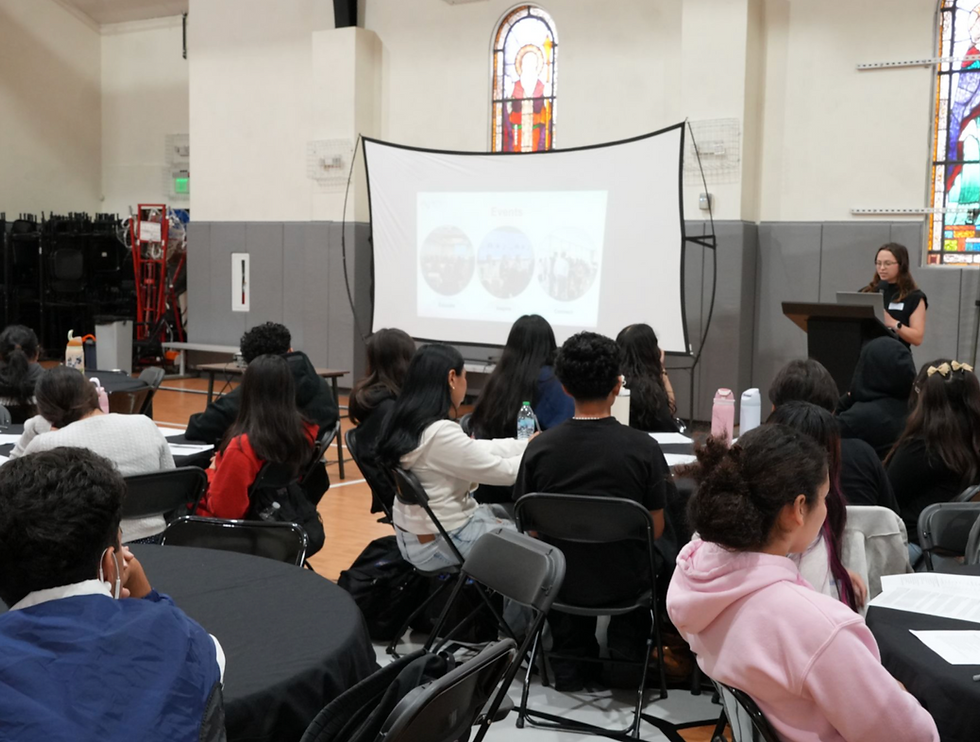
On Thursday, September 10th, BCLA hosted an evening dedicated to one of the most pressing challenges facing international scientists: building a career in U.S. biotech while navigating visas, sponsorship, and an unfamiliar job market. Students, postdocs, and early-career professionals from across the greater LA area gathered at USC's Ronald Tutor Campus Center for a keynote and panel discussion featuring international professionals who have built careers across academia, industry, startups, and immigration law.

The evening opened with a keynote from Ghaidaa Kashgari, PhD, Director of Pre-Clinical R&D at AVITA Medical, who traced her path from a bachelor's degree in Saudi Arabia to a PhD at UC Irvine and eventually into industry. She was candid about the pivot: after a pre-professor fellowship at Cal State Long Beach, she realized academia wasn't the right fit and made the leap into industry, a decision she called life-changing.

Dr. Kashgari shared the tactical advice that got her there: build an authentic resume, highlight skills over credentials, dress for the interview you want, and learn the U.S. job market before you're in it. But perhaps her most emphatic advice was also the simplest: network, network, network. For Dr. Kashgari, that advice came from experience. With a background in skin biology and wound healing, she reached out to someone at AVITA Medical, shared her story and resume, and that connection ultimately opened the door to the interview process that led to her role, an example of how genuine professional relationships can create opportunities beyond an online application.
She also walked through her own green card journey, pursuing a national interest waiver built largely on her publication record, including recommendation letters from researchers who had cited her work. Her closing message, though, wasn't about strategy at all: "Make sure that you live," she told the room, recalling how, after her thesis was approved, she chose to go watch a movie rather than immediately move on to planning what came next.

The panel that followed brought together four perspectives spanning R&D and immigration law: Farshad Alishahi, PhD (Scientist, Thermo Fisher Scientific), Winnie (Qianbin) Zhang, PhD (Senior Scientist, Amgen), Sih-Yao (Jones) Chow, PhD (Senior Scientist, Amgen), and Fuji Whittenburg, Esq. (Founder and Managing Partner of Whittenburg Immigration Law). The discussion was moderated by Lynn Yang (PhD Candidate in Molecular Biology at UCLA and BCLA Events co-lead).

Panelists tackled the postdoc-as-bridge question head-on. The larger message was not that there is one correct route into industry, but that each step should have a purpose. A postdoc can be a powerful bridge when it adds a new technical skill set, expands a professional network, strengthens an immigration profile, or gives someone the space to clarify where they want to go next. Without that purpose, panelists cautioned, it can simply delay the transition.
Practical job-search advice ran throughout: start networking on day one of your program, not when you need a job; translate academic accomplishments into industry language so resumes clear applicant tracking systems; and prepare for behavioral interviews using the STAR method, since hiring managers often weigh personality and team fit as heavily as technical skill.
The panel also emphasized that networking works best when it begins long before you need a referral. Rather than reaching out for the first time when a position opens, attendees were encouraged to connect with people whose career paths they genuinely want to understand, asking for a brief conversation about their experience, what they have learned, and what they might have done differently. Those conversations can offer insight into roles, teams, and company culture that a job posting cannot. More importantly, they turn networking from a last-minute transaction into a genuine professional relationship that can grow over time.

The conversation around work authorization was especially candid. Whittenburg encouraged attendees not to self-select out of roles over boilerplate "no sponsorship" language, to be transparent about visa status once conversations reach the offer stage, and to treat a visa timeline "like a relocation timeline," a logistics problem to plan around, not something to feel ashamed of. For those already working on OPT or STEM OPT, she also emphasized the value of building a strong relationship with a manager who can eventually become an internal advocate for sponsorship, rather than waiting until an expiration date or annual review forces the conversation.
Several panelists underscored a recurring theme from the keynote: publications, timelines, and paperwork all move faster when you start them early rather than waiting until a deadline forces your hand.

The conversations did not end when the panel did. Over food and drinks, attendees stayed to connect one-on-one with the keynote speaker, panelists, and one another—asking questions, exchanging experiences, and making connections across different career stages.
It was a fitting end to an evening in which networking had surfaced again and again as one of the most valuable tools for building a career in biotech. As several speakers emphasized throughout the evening, meaningful professional relationships often begin with something as simple as a conversation, genuine curiosity, or the confidence to introduce yourself. The networking reception gave attendees the opportunity to put that advice into practice and leave not only with new insights, but with new connections that could continue well beyond the event.
We would like to thank our panelists, keynote speakers, and attendees for taking part in such an important event. We would also like to extend a special thank you to our core sponsors, Amgen, Teknova, LA BioSpace, and Magnify at CNSI, for helping make this event possible.


Comments